Sabtu, 01 Mei 2010

[V610.Ebook] Fee Download The Silk Roads: A New History of the World, by Peter Frankopan

Fee Download The Silk Roads: A New History of the World, by Peter Frankopan

Here, we have countless book The Silk Roads: A New History Of The World, By Peter Frankopan and also collections to check out. We also serve alternative types and also sort of the publications to look. The enjoyable e-book, fiction, past history, novel, scientific research, and other sorts of e-books are offered right here. As this The Silk Roads: A New History Of The World, By Peter Frankopan, it turneds into one of the recommended publication The Silk Roads: A New History Of The World, By Peter Frankopan collections that we have. This is why you remain in the right website to see the remarkable e-books to possess.
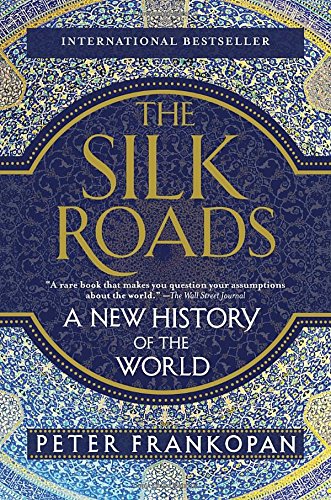
The Silk Roads: A New History of the World, by Peter Frankopan

The Silk Roads: A New History of the World, by Peter Frankopan


The Silk Roads: A New History of the World, by Peter Frankopan

Fee Download The Silk Roads: A New History of the World, by Peter Frankopan

New upgraded! The The Silk Roads: A New History Of The World, By Peter Frankopan from the best author and author is now available right here. This is guide The Silk Roads: A New History Of The World, By Peter Frankopan that will certainly make your day reading comes to be completed. When you are searching for the printed book The Silk Roads: A New History Of The World, By Peter Frankopan of this title in guide shop, you could not locate it. The problems can be the minimal editions The Silk Roads: A New History Of The World, By Peter Frankopan that are given up guide shop.

When some people taking a look at you while checking out The Silk Roads: A New History Of The World, By Peter Frankopan, you may really feel so pleased. But, rather than other people feels you have to instil in yourself that you are reading The Silk Roads: A New History Of The World, By Peter Frankopan not because of that factors. Reading this The Silk Roads: A New History Of The World, By Peter Frankopan will certainly provide you more than individuals admire. It will certainly overview of recognize more than the people looking at you. Even now, there are several resources to learning, reviewing a publication The Silk Roads: A New History Of The World, By Peter Frankopan still comes to be the front runner as an excellent way.

Why should be reading The Silk Roads: A New History Of The World, By Peter Frankopan Once again, it will depend on how you really feel and also consider it. It is definitely that a person of the advantage to take when reading this The Silk Roads: A New History Of The World, By Peter Frankopan; you can take much more lessons straight. Also you have actually not undergone it in your life; you could get the encounter by reviewing The Silk Roads: A New History Of The World, By Peter Frankopan As well as now, we will introduce you with the on-line book The Silk Roads: A New History Of The World, By Peter Frankopan in this site.

What kind of book The Silk Roads: A New History Of The World, By Peter Frankopan you will prefer to? Currently, you will not take the printed book. It is your time to obtain soft file publication The Silk Roads: A New History Of The World, By Peter Frankopan rather the printed records. You can appreciate this soft documents The Silk Roads: A New History Of The World, By Peter Frankopan in whenever you expect. Even it is in expected location as the other do, you could check out guide The Silk Roads: A New History Of The World, By Peter Frankopan in your gadget. Or if you desire much more, you can keep reading your computer system or laptop computer to get complete display leading. Juts find it right here by downloading and install the soft data The Silk Roads: A New History Of The World, By Peter Frankopan in link web page.

The Silk Roads: A New History of the World, by Peter Frankopan

Far more than a history of the Silk Roads, this book is truly a revelatory new history of the world, promising to destabilize notions of where we come from and where we are headed next. From the Middle East and its political instability to China and its economic rise, the vast region stretching eastward from the Balkans across the steppe and South Asia has been thrust into the global spotlight in recent years. Frankopan teaches us that to understand what is at stake for the cities and nations built on these intricate trade routes, we must first understand their astounding pasts.
�
Frankopan realigns our understanding of the world, pointing us eastward. It was on the Silk Roads that East and West first encountered each other through trade and conquest, leading to the spread of ideas, cultures and religions. From the rise and fall of empires to the spread of Buddhism and the advent of Christianity and Islam, right up to the great wars of the twentieth century—this book shows how the fate of the West has always been inextricably linked to the East.

  • Sales Rank: #4665 in Books
  • Brand: VINTAGE
  • Published on: 2017-03-07
  • Released on: 2017-03-07
  • Original language: English
  • Dimensions: 9.18" h x 1.43" w x 6.12" l, 1.42 pounds
  • Binding: Paperback
  • 672 pages
Features
  • VINTAGE

Review
“One of Mr. Frankopan’s gifts as a storyteller is his ability to draw unusual connections across his vast canvas . . . . Frankopan has written a rare book that makes you question your assumptions about the world.”�—The Wall Street Journal

“This provocative history challenges the view of the West as heir to a pure Greco-Roman culture. . . . Frankopan marshals diverse examples to demonstrate the interconnectedness of cultures, showing in vivid detail the economic and social impact of the silk and the slave trades, the Black Death, and the Buddhist influence on Christianity.” —The New Yorker
�
“In his new book,�The Silk Roads, Frankopan has created something that forces us to sit up and reconsider the world and the way we've always thought about it. . . . The book takes us by surprise right from the start.” —NPR�

“This is deeply researched popular history at its most invigorating, primed to dislodge routine preconceptions and to pour in other light. The freshness of . . .�Frankopan’s sources is stimulating, and their sheer range can provoke surprising connections. He likes to administer passing electric shocks.” —Colin Thubron, New York Review of Books�

“This is history on a grand scale, with a sweep and ambition that is rare. . . . A�remarkable book on many levels, a�proper historical epic of dazzling range and achievement.” —William Dalrymple,�The Guardian�

“A glorious read.�. . . Frankopan is an exhilarating companion for the journey along the routes which conveyed silk, slaves, ideas, religion, and disease, and around which today may hang the destiny of the world.” —Vanity Fair

“Dazzlingly rich and accessible. . . . By reorienting the history of the last few millennia to the east, and by resolutely keeping the camera rolling there, Frankopan unhooks us from the usual story of ‘Western Civ’ and gives us a startling and brilliant perspective on events that may once have been familiar—and plenty that aren’t.” —The Philadelphia Inquirer

“Beautifully constructed, a terrific and exhilarating read and a new perspective on world history.”�—History Today

About the Author
PETER FRANKOPAN�is a historian based at Oxford University. He is the author of�The First Crusade: The Call from the East,�a major monograph about Byzantium, Islam and the West in the eleventh and twelfth centuries. He is a senior research fellow at Worcester College, Oxford, and the director of the Oxford Centre for Byzantine Research at Oxford University. His revised translation of�The Alexiad�was published in the United States in 2009.

Excerpt. � Reprinted by permission. All rights reserved.
Preface
�
As a child, one of my most prized possessions was a large map of the world. It was pinned on the wall by my bed, and I would stare at it every night before I went to sleep. Before long, I had memorised the names and locations of all the countries, noting their capital cities, as well as the oceans and seas, and the rivers that flowed in to them; the names of major mountain ranges and deserts, written in urgent italics, thrilled with adventure and danger.
�
By the time I was a teenager, I had become uneasy about the relentlessly narrow geographic focus of my classes at school, which concentrated solely on western Europe and the United States and left most of the rest of the world untouched. We had been taught about the Romans in Britain; the Norman conquest of 1066; Henry VIII and the Tudors; the American War of Independence; Victorian industrialisation; the battle of the Somme; and the rise and fall of Nazi Germany. I would look up at my map and see huge regions of the world that had been passed over in silence.
�
For my fourteenth birthday my parents gave me a book by the anthropologist Eric Wolf, which really lit the tinder. The accepted and lazy history of civilisation, wrote Wolf, is one where “Ancient Greece begat Rome, Rome begat Christian Europe, Christian Europe begat the Renaissance, the Renaissance the Enlightenment, the Enlightenment political democracy and the industrial revolution. Industry crossed with democracy in turn yielded the United States, embodying the rights to life, liberty and the pursuit of happiness.” I immediately recognised that this was exactly the story that I had been told: the mantra of the political, cultural and moral triumph of the west. But this account was flawed; there were alternative ways of looking at history—ones that did not involve looking at the past from the perspective of the winners of recent history.
�
I was hooked. It was suddenly obvious that the regions we were not being taught about had become lost, suffocated by the insistent story of the rise of Europe. I begged my father to take me to see the Hereford Mappa Mundi, which located Jerusalem as its focus and mid-point, with England and other western countries placed off to one side, all but irrelevancies. When I read about Arab geographers whose works were accompanied by charts that seemed upside down and put the Caspian Sea at its centre, I was transfixed—as I was when I found out about an important medieval Turkish map in Istanbul that had at its heart a city called Balāsāghūn, which I had never even heard of, which did not appear on any maps, and whose very location was uncertain until recently, and yet was once considered the centre of the world.
�
I wanted to know more about Russia and Central Asia, about Persia and Mesopotamia. I wanted to understand the origins of Christianity when viewed from Asia; and how the Crusades looked to those living in the great cities of the Middle Ages—Constantinople, Jerusalem, Baghdad and Cairo, for example; I wanted to learn about the great empires of the east, about the Mongols and their conquests; and to understand how two world wars looked when viewed not from Flanders or the eastern front, but from Afghanistan and India.
�
It was extraordinarily fortunate therefore that I was able to learn Russian at school, where I was taught by Dick Haddon, a brilliant man who had served in Naval Intelligence and believed that the way to understand the Russian language and dusha, or soul, was through its sparkling literature and its peasant music. I was even more fortunate when he offered to give Arabic lessons to those who were interested, introducing half a dozen of us to Islamic culture and history, and immersing us in the beauty of classical Arabic. These languages helped unlock a world waiting to be discovered, or, as I soon realised, to be rediscovered by those of us in the west.
�
�
Today, much attention is devoted to assessing the likely impact of rapid economic growth in China, where demand for luxury goods is forecast to quadruple in the next decade, or to considering social change in India, where more people have access to a mobile phone than to a flushing toilet. But neither offers the best vantage point to view the world’s past and its present. In fact, for millennia, it was the region lying between east and west, linking Europe with the Pacific Ocean, that was the axis on which the globe spun.
�
The halfway point between east and west, running broadly from the eastern shores of the Mediterranean and the Black Sea to the Himalayas, might seem an unpromising position from which to assess the world. This is a region that is now home to states that evoke the exotic and the peripheral, like Kazakhstan and Uzbekistan, Kyrgyzstan and Turkmenistan, Tajikistan and the countries of the Caucasus; it is a region associated with regimes that are unstable, violent and a threat to international security, like Afghanistan, Iran, Iraq and Syria, or ill versed in the best practices of democracy, like Russia and Azerbaijan. Overall, it appears to be a region that is home to a series of failed or failing states, led by dictators who win impossibly large majorities in national elections and whose families and friends control sprawling business interests, own vast assets and wield political power. They are places with poor records on human rights, where freedom of expression in matters of faith, conscience and sexuality is limited, and where control of the media dictates what does and what does not appear in the press.
�
While such countries may seem wild to us, these are no backwaters, no obscure wastelands. In fact the bridge between east and west is the very crossroads of civilisation. Far from being on the fringe of global affairs, these countries lie at its very centre—as they have done since the beginning of history. It was here that Civilisation was born, and where many believed Mankind had been created—in the Garden of Eden, “planted by the Lord God” with “every tree that is pleasant to the sight and good for food,” which was widely thought to be located in the rich fields between the Tigris and Euphrates.
�
It was in this bridge between east and west that great metropolises were established nearly 5,000 years ago, where the cities of Harappa and Mohenjo-daro in the Indus valley were wonders of the ancient world, with populations numbering in the tens of thousands and streets connecting into a sophisticated sewage system that would not be rivalled in Europe for thousands of years. Other great centres of civilisation such as Babylon, Nineveh, Uruk and Akkad in Mesopotamia were famed for their grandeur and architectural innovation. One Chinese geographer, meanwhile, writing more than two millennia ago, noted that the inhabitants of Bactria, centred on the Oxus river and now located in northern Afghanistan, were legendary negotiators and traders; its capital city was home to a market where a huge range of products were bought and sold, carried from far and wide.
�
This region is where the world’s great religions burst into life, where Judaism, Christianity, Islam, Buddhism and Hinduism jostled with each other. It is the cauldron where language groups competed, where Indo-European, Semitic and Sino-Tibetan tongues wagged alongside those speaking Altaic, Turkic and Caucasian. This is where great empires rose and fell, where the after-effects of clashes between cultures and rivals were felt thousands of miles away. Standing here opened up new ways to view the past and showed a world that was profoundly interconnected, where what happened on one continent had an impact on another, where the after-shocks of what happened on the steppes of Central Asia could be felt in North Africa, where events in Baghdad resonated in Scandinavia, where discoveries in the Americas altered the prices of goods in China and led to a surge in demand in the horse markets of northern India.
�
These tremors were carried along a network that fans out in every direction, routes along which pilgrims and warriors, nomads and merchants have travelled, goods and produce have been bought and sold, and ideas exchanged, adapted and refined. They have carried not only prosperity, but also death and violence, disease and disaster. In the late nineteenth century, this sprawling web of connections was given a name by an eminent German geologist, Ferdinand von Richthofen (uncle of the First World War flying ace the “Red Baron”) that has stuck ever since: “Seidenstra�en”—the Silk Roads.
�
These pathways serve as the world’s central nervous system, connecting peoples and places together, but lying beneath the skin, invisible to the naked eye. Just as anatomy explains how the body functions, understanding these connections allows us to understand how the world works. And yet, despite the importance of this part of the world, it has been forgotten by mainstream history. In part, this is because of what has been called “orientalism”—the strident and overwhelmingly negative view of the east as undeveloped and inferior to the west, and therefore unworthy of serious study. But it also stems from the fact that the narrative of the past has become so dominant and well established that there is no place for a region that has long been seen as peripheral to the story of the rise of Europe and of western society.
�
Today, Jalalabad and Herat in Afghanistan, Fallujah and Mosul in Iraq or Homs and Aleppo in Syria seem synonymous with religious fundamentalism and sectarian violence. The present has washed away the past: gone are the days when the name of Kabul conjured up images of the gardens planted and tended by the great Bābur, founder of the Mughal Empire in India. The Bagh-i-Wafa (“Garden of Fidelity”) included a pool surrounded by orange and pomegranate trees and a clover meadow—of which Bābur was extremely proud: “This is the best part of the garden, a most beautiful sight when the oranges take colour. Truly that garden is admirably situated!”
�
�
�
In the same way, modern impressions about Iran have obscured the glories of its more distant history when its Persian predecessor was a byword for good taste in everything, from the fruit served at dinner, to the stunning miniature portraits produced by its legendary artists, to the paper that scholars wrote on. A beautifully considered work written by Simi Nīshāpūrī, a librarian from Mashad in eastern Iran around 1400, records in careful detail the advice of a book lover who shared his passion. Anyone thinking of writing, he counsels solemnly, should be advised that the best paper for calligraphy is produced in Damascus, Baghdad or Samarkand. Paper from elsewhere “is generally rough, blotches and is impermanent.” Bear in mind, he cautions, that it is worth giving paper a slight tint before committing ink to it, “because white is hard on the eyes and the master calligraphic specimens that have been observed have all been on tinted paper.”
�
Places whose names are all but forgotten once dominated, such as Merv, described by one tenth-century geographer as a “delightful, fine, elegant, brilliant, extensive and pleasant city,” and “the mother of the world”; or Rayy, not far from modern Teheran, which to another writer around the same time was so glorious as to be considered “the bridegroom of the earth” and the world’s “most beautiful creation.” Dotted across the spine of Asia, these cities were strung like pearls, linking the Pacific to the Mediterranean.
�
Urban centres spurred each other on, with rivalry between rulers and elites prompting ever more ambitious architecture and spectacular monuments. Libraries, places of worship, churches and observatories of immense scale and cultural influence dotted the region, connecting Constantinople to Damascus, Isfahan, Samarkand, Kabul and Kashgar. Cities such as these became home to brilliant scholars who advanced the frontiers of their subjects. The names of only a small handful are familiar today—men like Ibn Sīnā, better known as Avicenna, al-Bīrūnī _and al-Khwārizmi—giants in the fields of astronomy and medicine; but there were many more besides. For centuries before the early modern era, the intellectual centres of excellence of the world, the Oxfords and Cambridges, the Harvards and Yales, were not located in Europe or the west, but in Baghdad and Balkh, Bukhara and Samarkand.
�
There was good reason why the cultures, cities and peoples who lived along the Silk Roads developed and advanced: as they traded and exchanged ideas, they learnt and borrowed from each other, stimulating further advances in philosophy, the sciences, language and religion. Progress was essential, as one of the rulers of the kingdom of Zhao in north-eastern China at one extremity of Asia more than 2,000 years ago knew all too well. “A talent for following the ways of yesterday,” declared King Wu-ling in 307 bc, “is not sufficient to improve the world of today.” Leaders in the past understood how important it was to keep up with the times.
�
The mantle of progress shifted, however, in the early modern period as a result of two great maritime expeditions that took place at the end of the fifteenth century. In the course of six years in the 1490s, the foundations were laid for a major disruption to the rhythm of long-established systems of exchange. First Christopher Columbus crossed the Atlantic, paving the way for two great land masses that were hitherto untouched to connect to Europe and beyond; then, just a few years later, Vasco da Gama successfully navigated the southern tip of Africa, sailing on to India, opening new sea routes in the process. The discoveries changed patterns of interaction and trade, and effected a remarkable change in the world’s political and economic centre of gravity. Suddenly, western Europe was transformed from its position as a regional backwater into the fulcrum of a sprawling communication, transportation and trading system: at a stroke, it became the new mid-point between east and west.
�
The rise of Europe sparked a fierce battle for power—and for control of the past. As rivals squared up to each other, history was reshaped to emphasise the events, themes and ideas that could be used in the ideological clashes that raged alongside the struggle for resources and for command of the sea lanes. Busts were made of leading politicians and generals wearing togas to make them look like Roman heroes of the past; magnificent new buildings were constructed in grand classical style that appropriated the glories of the ancient world as their own direct antecedents. History was twisted and manipulated to create an insistent narrative where the rise of the west was not only natural and inevitable, but a continuation of what had gone before.
�
�
Many stories set me on the path to looking at the world’s past in a different way. But one stood out in particular. Greek mythology had it that Zeus, father of the gods, released two eagles, one at each end of the earth, and commanded them to fly towards each other. A sacred stone, the omphalos—the navel of the world—was placed where they met, to enable communication with the divine. I learnt later that the concept of this stone has long been a source of fascination for philosophers and psychoanalysts.
�
I remember gazing at my map when I first heard this tale, wondering where the eagles would have met. I imagined them taking off from the shores of the western Atlantic and the Pacific coast of China and heading inland. The precise position changed, depending where I placed my fingers to start measuring equal distances from east and west. But I always ended up somewhere between the Black Sea and the Himalayas. I would lie awake at night, pondering the map on my bedroom wall, Zeus’ eagles and the history of a region that was never mentioned in the books that I read—and did not have a name.
�
Not so long ago, Europeans divided Asia into three broad zones—the Near, Middle and Far East. Yet whenever I heard or read about present-day problems as I was growing up, it seemed that the second of these, the Middle East, had shifted in meaning and even location, being used to refer to Israel, Palestine and the surrounding area, and occasionally to the Persian Gulf. And I could not understand why I kept being told of the importance of the Mediterranean as a cradle of civilisation, when it seemed so obvious that this was not where civilisation had really been forged. The real crucible, the “Mediterranean” in its literal meaning—the centre of the world—was not a sea separating Europe and North Africa, but right in the heart of Asia.
�
My hope is that I can embolden others to study peoples and places that have been ignored by scholars for generations by opening up new questions and new areas of research. I hope to prompt new questions to be asked about the past, and for truisms to be challenged and scrutinised. Above all, I hope to inspire those who read this book to look at history in a different way.
�
Worcester College, Oxford
April 2015

Most helpful customer reviews

104 of 111 people found the following review helpful.
Wonderful Readable History
By Andrew Desmond
“The Silk Roads” is a wonderful invigorating work of history. It is directed to the general reader rather than the specialist. I found it be absolutely riveting.

The essence of the book is that, in the West, our history is viewed through a very narrow lense. Schools teach its students of the Roman Empire, the subsequent Dark Ages, the Norman conquest in 1066, Henry VIII and the Tudors, the American War of Independence, the Industrial Revolution and the First and Second World Wars. The vast bulk of a map of the world from western Europe to China is passed over very quickly. With “The Silk Roads”, Peter Frankopan has attempted to redress this imbalance.

As the author states:

“For centuries before the early modern era, the intellectual centres of excellence of the world, the Oxfords ad Cambridges, the Harvards and Yales, were not located in Europe or the west, but in Baghdad, and Balkh, Bukhara and Samarkand”.

Moreover, Frankopan gives the reader a perspective on the rise of Mesopotamia, Alexander the Great, the rise of Christianity in the eastern Roman Empire and then the subsequent rise of Islam throughout much of Asia. He then proceeds to discuss the Crusades, the rise of Genghis Khan and his mighty Mongol Empire and then the rise of China more specifically. He concludes by bringing the book up to the present day with the rise of Europe and the USA before suggesting that there is a reorienting of history underway again. In other words:

“we are witnessing…the birthing pains of a region that once dominated the intellectual, cultural and economic landscape and which is now re-emerging. We are seeing the signs of the world’s centre of gravity shifting – back to where it lay for millennia”.

Whether you agree or not with Peter Frankopan’s conclusions, the book remains a tour-de-force. Thoroughly recommended.

323 of 359 people found the following review helpful.
Hagiography
By Amazon Customer
Expansive and informative for all who have not had the privilege of Central Asian travel, this book leaves me with some anguish.
First, the joy of the read. The author's depth of knowledge and resource access, coupled with his polyglot skills, weave a centuries long tale of intrigue across a region of the world little known or travelled today. The endnotes are extensive, if somewhat dated. He has the ability to enliven each decade's heroes and villains. As a history aficionado and world traveler, I am grateful for his bringing to life the real world, and the historical world, of Central Asia. It has been little understood in the West - or the East.
Now the hard part. The Islamic world of the 8th through 16th centuries was one of humanity's global centers. This history should be better understood, in light of its achievements and of today's relevance. Yet, the author serves this world as its hagiographer. Apologist is too strong a word, certainly. The endless cycle of hatred and violence between Shi'a and Sunni within this center of gravity during this time is passed over in one brief paragraph. The Councils of Nicaea and those that followed are described in excruciating detail. The story of the European debacle of the same time is repeatedly narrated, engrossing the reader in its internecine religious wars.
The Asian steppe peoples' incursions of the 12th through 14th centuries are described too often as an enlightened event for all. Piles of skulls and cities entirely wiped off the face of the earth are ignored in favor of the administrative advantages of Mongol rule. Horsemanship is ignored in favor of bettering western siege towers. India subcontinent history, certainly as important as European, fairs poorly at best in this vast chronicle. Chinese history is ancillary to the main event.
A secondary theme is economics. All trade is based upon 'luxury goods' in demand by voracious Asian and European rulers. Information is 'quickly transmitted' across the sands, mountains and rivers - this when 30 miles a day was the fastest a horse or man could travel. Decisions described by scholarly journals as economics based are ascertained as truth, often without reference. This is surprising given the plethora of multi-linguistic sources. Religion and money dictate virtually all decisions made over 3,000 years of history. I would suggest this is too myopic a view.
This book would appear to be designed to the glory of Islam, its history and its advantage to all whom came in contact. Lesser peoples and religions are scorned. Animosities within African, European, Asian and Indian cultures flow for pages. Islam is simply a series of improvements upon past glorious battles and architecture.
I have visited virtually every city and region described herein. The peace of Islam today is one of absolute submission - the real definition of the word Islam: submission.
Other books in the vein of Central Asia would include The Poison King, Balthazar's Odyssey, The Ornament of the World, The Emergence of Modern Islam, Chasing the Sea, The Shied of Achilles and best, Millennium by Felipe Fernandez-Armesto.
Would love to rate it higher, but the perverse noise against non-Islamic culture and societies is bothersome. The ridicule of Western advances coupled to dictatorial domination and horrific tortures could just as easily describe Islamic, Indian, Chinese or Russian worlds.
As for his Palestinian views, well, they are biased, leave it at that...

Can't wait to enjoy My Fair Lady, his Mediterranean yacht for charter...

173 of 192 people found the following review helpful.
Surprisingly Disappointing
By Down Happy
I was very disappointed after reading all the wonderful reviews. Maybe they are reading a different book? I had assumed we would be learning about the history of the silk roads and the many dynasties that rose and fell along the route - the Songdians, the cities of the Tamir Basin for example. I thought this would be an Asian centric book showing the silk roads impact on Han Dynasty China and the steps that had to be taken to keep the route secure. I thought we would learn of the earliest use of the silk road in trade between Sumeria and what is now northern Afganistan based on the early trade in Lapis and how this led to the later creation of Faience. Or perhaps how the silk road brought Buddhism to the west and mixed the artistic sense of the descendants of Alexander's army with the Central Asian Buddhist cave dwellers. I was very wrong in my expectations.

Maybe I am missing something but this is still a Western-centric view, centered on Byzantium and medieval Europe. The first steppe dwellers we meet in any depth are the Mongols, who by that time, are a thousand years later than the early steppe dwellers who so profoundly influenced world culture both East and West. This book spends most of it's time in detailing the trade and fortunes of the West instead of focusing on the various kingdoms of the silk road. What is going on here? How could all the reviewers have missed this? This book is not as advertised a new history of the world, but rather a view of the economic impact of trade on the western world. For example, how does Columbus come to bear on the silk road? We read here about his expedition but no analysis relating to the silk road at all. That is one of many examples to show that the author does not seem to have much interest in writing about the silk road, but rather about how luxury good trade impacts the western world.

This is my first book review although I have read dozens that I may not like. I am only writing this because it is not that I do not like what is written, but rather it is not what the book title implies and I want to give fair warning to others who may be like me in their interests.

See all 254 customer reviews...

The Silk Roads: A New History of the World, by Peter Frankopan PDF
The Silk Roads: A New History of the World, by Peter Frankopan EPub
The Silk Roads: A New History of the World, by Peter Frankopan Doc
The Silk Roads: A New History of the World, by Peter Frankopan iBooks
The Silk Roads: A New History of the World, by Peter Frankopan rtf
The Silk Roads: A New History of the World, by Peter Frankopan Mobipocket
The Silk Roads: A New History of the World, by Peter Frankopan Kindle

The Silk Roads: A New History of the World, by Peter Frankopan PDF

The Silk Roads: A New History of the World, by Peter Frankopan PDF

The Silk Roads: A New History of the World, by Peter Frankopan PDF

Jumat, 30 April 2010

[R143.Ebook] Fee Download Rabbit Hole: A Play, by David Lindsay-Abaire

Fee Download Rabbit Hole: A Play, by David Lindsay-Abaire

Why need to be this e-book Rabbit Hole: A Play, By David Lindsay-Abaire to review? You will certainly never ever obtain the knowledge as well as encounter without obtaining by on your own there or trying on your own to do it. For this reason, reading this e-book Rabbit Hole: A Play, By David Lindsay-Abaire is required. You could be great as well as appropriate enough to obtain how vital is reviewing this Rabbit Hole: A Play, By David Lindsay-Abaire Even you consistently read by obligation, you could sustain yourself to have reading e-book habit. It will be so beneficial and enjoyable after that.

Rabbit Hole: A Play, by David Lindsay-Abaire

Rabbit Hole: A Play, by David Lindsay-Abaire


Rabbit Hole: A Play, by David Lindsay-Abaire

Fee Download Rabbit Hole: A Play, by David Lindsay-Abaire

Why must select the problem one if there is simple? Get the profit by buying the book Rabbit Hole: A Play, By David Lindsay-Abaire right here. You will certainly get various means making an offer and also get the book Rabbit Hole: A Play, By David Lindsay-Abaire As recognized, nowadays. Soft file of guides Rabbit Hole: A Play, By David Lindsay-Abaire end up being popular among the viewers. Are you among them? And also here, we are offering you the new compilation of ours, the Rabbit Hole: A Play, By David Lindsay-Abaire.

There is no question that book Rabbit Hole: A Play, By David Lindsay-Abaire will consistently make you motivations. Even this is merely a publication Rabbit Hole: A Play, By David Lindsay-Abaire; you could find several categories and kinds of books. From amusing to journey to politic, and also scientific researches are all given. As exactly what we explain, right here we offer those all, from popular writers as well as publisher around the world. This Rabbit Hole: A Play, By David Lindsay-Abaire is among the collections. Are you interested? Take it currently. Exactly how is the way? Find out more this short article!

When somebody must go to guide shops, search shop by establishment, rack by rack, it is very problematic. This is why we give guide compilations in this website. It will certainly relieve you to search the book Rabbit Hole: A Play, By David Lindsay-Abaire as you like. By browsing the title, publisher, or authors of guide you want, you could discover them quickly. At home, office, or even in your way can be all best place within internet connections. If you intend to download and install the Rabbit Hole: A Play, By David Lindsay-Abaire, it is very easy then, since now we extend the link to purchase as well as make bargains to download Rabbit Hole: A Play, By David Lindsay-Abaire So very easy!

Curious? Naturally, this is why, we mean you to click the link web page to see, and afterwards you can appreciate the book Rabbit Hole: A Play, By David Lindsay-Abaire downloaded till finished. You can save the soft file of this Rabbit Hole: A Play, By David Lindsay-Abaire in your gizmo. Naturally, you will bring the gadget almost everywhere, won't you? This is why, every time you have spare time, whenever you can delight in reading by soft copy publication Rabbit Hole: A Play, By David Lindsay-Abaire

Rabbit Hole: A Play, by David Lindsay-Abaire

  • Sales Rank: #4768009 in Books
  • Published on: 2007
  • Binding: Paperback
  • 64 pages

Most helpful customer reviews

See all customer reviews...

Rabbit Hole: A Play, by David Lindsay-Abaire PDF
Rabbit Hole: A Play, by David Lindsay-Abaire EPub
Rabbit Hole: A Play, by David Lindsay-Abaire Doc
Rabbit Hole: A Play, by David Lindsay-Abaire iBooks
Rabbit Hole: A Play, by David Lindsay-Abaire rtf
Rabbit Hole: A Play, by David Lindsay-Abaire Mobipocket
Rabbit Hole: A Play, by David Lindsay-Abaire Kindle

Rabbit Hole: A Play, by David Lindsay-Abaire PDF

Rabbit Hole: A Play, by David Lindsay-Abaire PDF

Rabbit Hole: A Play, by David Lindsay-Abaire PDF

Selasa, 27 April 2010

[Q742.Ebook] Ebook Free Christmas Book, by Gyles Brandreth

Ebook Free Christmas Book, by Gyles Brandreth

Knowing the way ways to get this book Christmas Book, By Gyles Brandreth is also useful. You have been in ideal site to begin getting this info. Get the Christmas Book, By Gyles Brandreth link that we provide right here and visit the link. You can buy the book Christmas Book, By Gyles Brandreth or get it as soon as possible. You could promptly download this Christmas Book, By Gyles Brandreth after obtaining deal. So, when you need the book rapidly, you can straight obtain it. It's so easy and so fats, isn't it? You have to prefer to by doing this.

Christmas Book, by Gyles Brandreth

Christmas Book, by Gyles Brandreth


Christmas Book, by Gyles Brandreth

Ebook Free Christmas Book, by Gyles Brandreth

Christmas Book, By Gyles Brandreth. What are you doing when having spare time? Chatting or scanning? Why don't you try to review some publication? Why should be reviewing? Reviewing is one of fun as well as pleasurable activity to do in your extra time. By reading from many resources, you can locate new info and also encounter. The books Christmas Book, By Gyles Brandreth to review will certainly be numerous beginning with scientific books to the fiction books. It means that you can review guides based on the necessity that you wish to take. Naturally, it will be various as well as you can check out all publication kinds whenever. As right here, we will certainly show you a book should be reviewed. This e-book Christmas Book, By Gyles Brandreth is the selection.

Well, e-book Christmas Book, By Gyles Brandreth will certainly make you closer to just what you are eager. This Christmas Book, By Gyles Brandreth will certainly be always excellent close friend whenever. You might not forcedly to always complete over reviewing an e-book in other words time. It will certainly be simply when you have spare time and spending couple of time to make you feel satisfaction with exactly what you check out. So, you can obtain the definition of the message from each sentence in the e-book.

Do you understand why you ought to review this website and also just what the relation to reading e-book Christmas Book, By Gyles Brandreth In this contemporary age, there are numerous methods to acquire guide and also they will certainly be a lot easier to do. One of them is by getting guide Christmas Book, By Gyles Brandreth by on the internet as what we tell in the link download. Guide Christmas Book, By Gyles Brandreth can be a selection considering that it is so appropriate to your need now. To obtain the publication online is really easy by just downloading them. With this possibility, you could read the publication anywhere as well as whenever you are. When taking a train, awaiting listing, and awaiting an individual or various other, you can read this online publication Christmas Book, By Gyles Brandreth as an excellent close friend again.

Yeah, reading an e-book Christmas Book, By Gyles Brandreth can include your pals lists. This is among the formulas for you to be effective. As recognized, success does not indicate that you have excellent points. Comprehending and also knowing more than other will offer each success. Close to, the notification and impression of this Christmas Book, By Gyles Brandreth could be taken and picked to act.

Christmas Book, by Gyles Brandreth

Discusses the history and traditions of Christmas and includes holiday games, recipes, carols, plays, and instructions for making decorations.

  • Sales Rank: #16284781 in Books
  • Published on: 1984-09
  • Original language: English
  • Binding: Hardcover
  • 192 pages

Most helpful customer reviews

See all customer reviews...

Christmas Book, by Gyles Brandreth PDF
Christmas Book, by Gyles Brandreth EPub
Christmas Book, by Gyles Brandreth Doc
Christmas Book, by Gyles Brandreth iBooks
Christmas Book, by Gyles Brandreth rtf
Christmas Book, by Gyles Brandreth Mobipocket
Christmas Book, by Gyles Brandreth Kindle

Christmas Book, by Gyles Brandreth PDF

Christmas Book, by Gyles Brandreth PDF

Christmas Book, by Gyles Brandreth PDF

Senin, 26 April 2010

[N735.Ebook] PDF Ebook Astrological Almanac for 2016, by Lynne Palmer

PDF Ebook Astrological Almanac for 2016, by Lynne Palmer

This is likewise among the factors by getting the soft documents of this Astrological Almanac For 2016, By Lynne Palmer by online. You may not require more times to spend to see the publication establishment and search for them. Sometimes, you also do not locate the e-book Astrological Almanac For 2016, By Lynne Palmer that you are hunting for. It will certainly lose the moment. However right here, when you see this web page, it will certainly be so very easy to get and download and install the book Astrological Almanac For 2016, By Lynne Palmer It will not take many times as we explain before. You could do it while doing another thing at residence or perhaps in your office. So simple! So, are you question? Simply exercise what we provide right here and read Astrological Almanac For 2016, By Lynne Palmer just what you love to read!

Astrological Almanac for 2016, by Lynne Palmer

Astrological Almanac for 2016, by Lynne Palmer


Astrological Almanac for 2016, by Lynne Palmer

PDF Ebook Astrological Almanac for 2016, by Lynne Palmer

Astrological Almanac For 2016, By Lynne Palmer In fact, book is truly a window to the world. Even lots of people might not such as reviewing books; the books will consistently offer the exact details concerning truth, fiction, experience, experience, politic, religion, as well as more. We are right here an internet site that offers collections of books greater than the book store. Why? We give you lots of varieties of connect to obtain guide Astrological Almanac For 2016, By Lynne Palmer On is as you require this Astrological Almanac For 2016, By Lynne Palmer You can discover this book easily right here.

This book Astrological Almanac For 2016, By Lynne Palmer deals you much better of life that could produce the quality of the life better. This Astrological Almanac For 2016, By Lynne Palmer is what individuals currently require. You are below and also you could be precise and also sure to get this publication Astrological Almanac For 2016, By Lynne Palmer Never doubt to obtain it also this is just a book. You can get this publication Astrological Almanac For 2016, By Lynne Palmer as one of your compilations. However, not the compilation to present in your shelfs. This is a precious publication to be reading compilation.

Just how is making certain that this Astrological Almanac For 2016, By Lynne Palmer will not displayed in your shelfs? This is a soft documents book Astrological Almanac For 2016, By Lynne Palmer, so you could download Astrological Almanac For 2016, By Lynne Palmer by buying to obtain the soft documents. It will relieve you to read it every time you require. When you really feel lazy to relocate the published book from home to office to some place, this soft file will certainly alleviate you not to do that. Due to the fact that you can only conserve the information in your computer unit and device. So, it enables you review it everywhere you have readiness to check out Astrological Almanac For 2016, By Lynne Palmer

Well, when else will certainly you find this possibility to obtain this book Astrological Almanac For 2016, By Lynne Palmer soft file? This is your great possibility to be right here and also get this excellent publication Astrological Almanac For 2016, By Lynne Palmer Never ever leave this book before downloading this soft data of Astrological Almanac For 2016, By Lynne Palmer in link that we give. Astrological Almanac For 2016, By Lynne Palmer will really make a large amount to be your friend in your lonely. It will be the most effective partner to improve your company as well as pastime.

Astrological Almanac for 2016, by Lynne Palmer

The Astrological Almanac is complete with tips on each of the zodiac signs; this book allows you to time your activities to your best advantage. No need to search for information, this book lists everything from A (Acquisitions) to Y (Yoga) that lets you know when to plan anything, such as a hair cut, beauty treatment, major surgery, or traveling. When you want to know the best time to do anything, merely consult the Astrological Almanac that lists the events of modern life. Everyone can benefit with this Astrological Almanac. It can be used by people in all age brackets, of both sexes, professionals and nonprofessionals, and from all walks of life. There is something for everyone in this book: a complete Sun sign synopsis as well as information to determine the best time to undertake or fulfill any venture. Why is this book unique? A general Sun sign book does not give the information contained in this Astrological Almanac, especially as provided in Part One--Sun signs; your color, gem, stone, number, day, city, state, country, healthful herb teas for the zone of the body ruled by your sign, cell salts, books, music, fashion ruled by your sign, the kinds of flowers, gifts and perfumes for each sign, and compatibility (or how you get along sexually with everyone--all zodiac signs), the best days for sex, and your forecast for the year. Another unique feature is the Best Days Guide for Daily Activities (Part Two), which gives dates to enable you to determine the right time to do whatever you wish in order to obtain the best results and quickest action possible. Thus, you can consult this Astrological Almanac to apply to your daily life (there are 500 categories), enabling you to make advance plans concerning a specific activity or venture. For instance, what is a good date to start a legal action? Open a business? Advertise? Get hired for a job? Give a party? Go on a diet? Go on a trip? Have your hair cut? Have dental work? Have surgery? Plant crops? Can food? Have you ever wondered why a restaurant opened and folded, even though the food was tasty, the decor charming, and the service good? Because it was opened, astrologically, at the wrong time. "Everything in life is in the timing" is a well-known adage that has been expressed over and over by millions of people. In this Astrological Almanac, you will be able to determine when to do something to attain the most propitious results. To use this information, you do not need your horoscope, nor do you need to know your Sun sign. Just look for the activity you are interested in (they are listed alphabetically), find the favorable dates to take action throughout the year, and plan accordingly. This applies to everyone regardless of your Sun sign.

  • Sales Rank: #355362 in Books
  • Published on: 2016-01-01
  • Original language: English
  • Number of items: 1
  • Dimensions: 9.00" h x .47" w x 6.00" l, .63 pounds
  • Binding: Paperback
  • 208 pages

Most helpful customer reviews

2 of 2 people found the following review helpful.
Great reference!
By Sophie
Every year I buy this book great for referencing times surgeries, physical therapy, times to travel...planting flowers, garden best times for crops. Great reference. Very disappointed it was not for sale for almost two months....but great to have now.

1 of 1 people found the following review helpful.
WILL NEVER BE WITHOUT IT!!!!
By Ben R. Grego
I"ve been buying this annual for many years now........I use the 'best dates' for my dental cleanings, eye exams, and chiropractic treatments....also use it 'slow hair growth" dates.....and every year I give family & friends the best dates to cut their lawns for slow growth.....they razz me about it, but if I don't get it to them early in the season they ask where it is!!! lol...........

Also have a friend with a small bakery business.....there's even a 'best baking dates' list!!!!!! she was skeptical but tried it and was amazed at the results.

so yes, this stuff DOES WORK...............I could never be without it.

I will add, on a sad note, that Ms. Palmer's health is not the best right now.......I spoke to her on the phone a few months ago and she will be turning the almanac over to someone else soon........she also said she's had problems finding a typist to do the work, as it's so involved.....

anyway, GET THIS ALMANAC NOW AN EVERY YEAR.... you'll be amazed at what it can do for you.

I cannot recommend it highly enough!!!!!!!!

2 of 2 people found the following review helpful.
Thanks Lynne Palmer!
By JP
Lynne Palmer's Astrological Almanac is a must have. So happy this is still being made. I have been buying it for about 20 years now. Thanks Lynne Palmer!

See all 13 customer reviews...

Astrological Almanac for 2016, by Lynne Palmer PDF
Astrological Almanac for 2016, by Lynne Palmer EPub
Astrological Almanac for 2016, by Lynne Palmer Doc
Astrological Almanac for 2016, by Lynne Palmer iBooks
Astrological Almanac for 2016, by Lynne Palmer rtf
Astrological Almanac for 2016, by Lynne Palmer Mobipocket
Astrological Almanac for 2016, by Lynne Palmer Kindle

Astrological Almanac for 2016, by Lynne Palmer PDF

Astrological Almanac for 2016, by Lynne Palmer PDF

Astrological Almanac for 2016, by Lynne Palmer PDF

Kamis, 22 April 2010

[Q984.Ebook] Ebook UML 2 Certification Guide: Fundamental and Intermediate Exams (The MK/OMG Press), by Tim Weilkiens, Bernd Oestereich

Ebook UML 2 Certification Guide: Fundamental and Intermediate Exams (The MK/OMG Press), by Tim Weilkiens, Bernd Oestereich

Based on some experiences of many individuals, it is in truth that reading this UML 2 Certification Guide: Fundamental And Intermediate Exams (The MK/OMG Press), By Tim Weilkiens, Bernd Oestereich can help them to make much better selection as well as give more encounter. If you intend to be among them, allow's purchase this book UML 2 Certification Guide: Fundamental And Intermediate Exams (The MK/OMG Press), By Tim Weilkiens, Bernd Oestereich by downloading and install the book on link download in this site. You can get the soft documents of this publication UML 2 Certification Guide: Fundamental And Intermediate Exams (The MK/OMG Press), By Tim Weilkiens, Bernd Oestereich to download and install and deposit in your readily available electronic devices. What are you awaiting? Allow get this book UML 2 Certification Guide: Fundamental And Intermediate Exams (The MK/OMG Press), By Tim Weilkiens, Bernd Oestereich online and also read them in any time and also any sort of area you will check out. It will not encumber you to bring heavy publication UML 2 Certification Guide: Fundamental And Intermediate Exams (The MK/OMG Press), By Tim Weilkiens, Bernd Oestereich within your bag.

UML 2 Certification Guide: Fundamental and Intermediate Exams (The MK/OMG Press), by Tim Weilkiens, Bernd Oestereich

UML 2 Certification Guide: Fundamental and Intermediate Exams (The MK/OMG Press), by Tim Weilkiens, Bernd Oestereich


UML 2 Certification Guide: Fundamental and Intermediate Exams (The MK/OMG Press), by Tim Weilkiens, Bernd Oestereich

Ebook UML 2 Certification Guide: Fundamental and Intermediate Exams (The MK/OMG Press), by Tim Weilkiens, Bernd Oestereich

UML 2 Certification Guide: Fundamental And Intermediate Exams (The MK/OMG Press), By Tim Weilkiens, Bernd Oestereich. It is the moment to enhance and refresh your skill, knowledge and also experience consisted of some entertainment for you after long time with monotone points. Working in the workplace, visiting research, learning from test and also more activities could be finished and you need to start brand-new things. If you really feel so tired, why do not you attempt brand-new thing? A really simple point? Reviewing UML 2 Certification Guide: Fundamental And Intermediate Exams (The MK/OMG Press), By Tim Weilkiens, Bernd Oestereich is exactly what we provide to you will recognize. As well as the book with the title UML 2 Certification Guide: Fundamental And Intermediate Exams (The MK/OMG Press), By Tim Weilkiens, Bernd Oestereich is the referral currently.

As understood, several individuals state that publications are the custom windows for the globe. It does not mean that purchasing publication UML 2 Certification Guide: Fundamental And Intermediate Exams (The MK/OMG Press), By Tim Weilkiens, Bernd Oestereich will certainly imply that you could get this globe. Merely for joke! Reading a publication UML 2 Certification Guide: Fundamental And Intermediate Exams (The MK/OMG Press), By Tim Weilkiens, Bernd Oestereich will certainly opened up a person to believe much better, to maintain smile, to captivate themselves, and also to encourage the understanding. Every e-book additionally has their characteristic to influence the visitor. Have you known why you read this UML 2 Certification Guide: Fundamental And Intermediate Exams (The MK/OMG Press), By Tim Weilkiens, Bernd Oestereich for?

Well, still confused of ways to obtain this book UML 2 Certification Guide: Fundamental And Intermediate Exams (The MK/OMG Press), By Tim Weilkiens, Bernd Oestereich here without going outside? Just connect your computer system or gadget to the internet and also start downloading and install UML 2 Certification Guide: Fundamental And Intermediate Exams (The MK/OMG Press), By Tim Weilkiens, Bernd Oestereich Where? This page will certainly reveal you the web link web page to download and install UML 2 Certification Guide: Fundamental And Intermediate Exams (The MK/OMG Press), By Tim Weilkiens, Bernd Oestereich You never ever stress, your favourite book will certainly be quicker your own now. It will be much easier to appreciate checking out UML 2 Certification Guide: Fundamental And Intermediate Exams (The MK/OMG Press), By Tim Weilkiens, Bernd Oestereich by on-line or obtaining the soft data on your device. It will certainly regardless of that you are and exactly what you are. This book UML 2 Certification Guide: Fundamental And Intermediate Exams (The MK/OMG Press), By Tim Weilkiens, Bernd Oestereich is created for public as well as you are one of them who could delight in reading of this book UML 2 Certification Guide: Fundamental And Intermediate Exams (The MK/OMG Press), By Tim Weilkiens, Bernd Oestereich

Investing the spare time by checking out UML 2 Certification Guide: Fundamental And Intermediate Exams (The MK/OMG Press), By Tim Weilkiens, Bernd Oestereich can supply such great encounter even you are only seating on your chair in the workplace or in your bed. It will certainly not curse your time. This UML 2 Certification Guide: Fundamental And Intermediate Exams (The MK/OMG Press), By Tim Weilkiens, Bernd Oestereich will certainly guide you to have more valuable time while taking remainder. It is very delightful when at the twelve noon, with a mug of coffee or tea and a publication UML 2 Certification Guide: Fundamental And Intermediate Exams (The MK/OMG Press), By Tim Weilkiens, Bernd Oestereich in your device or computer system screen. By appreciating the sights around, here you can start reviewing.

UML 2 Certification Guide: Fundamental and Intermediate Exams (The MK/OMG Press), by Tim Weilkiens, Bernd Oestereich

The popular Unified Modeling Language (UML) is both a language and notation developed by the Object Management Group (OMG) used to design and create specifications for software systems. With the recent release of version 2.0 UML, the OMG has started the OMG-Certified UML Professional Program to provide an objective measure of UML knowledge. As a certified UML professional a developer has an important credential to present to employers and clients. Certification also benefits companies looking for skilled UML practitioners by giving them a basis for making hiring and promotion decisions.

UML 2 Certification Guide is the only official study guide to passing the new UML exams. This book systematically covers all of the topics covered in the exams, and has been carefully reviewed by the OMG. The book begins by assuming only a basic knowledge of UML and then progresses far enough to allow a reader to pass both the fundamental and the intermediate level exams. Along the way the book also covers topics that are not in introductory books on UML but that are necessary to pass the exams. Tim Weilkiens is considered one of the top ten experts on UML, and both authors have extensive experience training developers to successfully take the exams.

  • The official certification resource
  • Assumes a basic knowledge of UML so that you can focus immediately on the exams
  • Written by two authors known for their skill as trainers, consultants, and developers
  • Developed systematically to enable you to master all exam topics―without exception
  • Covers the use of UML for applications, as required by the exams, both inside and outside of the realm of software development
  • Includes a practice exam, glossary, list of books, and website information

  • Sales Rank: #1672044 in Books
  • Brand: Weilkiens, Tim/ Oestereich, Bernd
  • Published on: 2006-12-18
  • Released on: 2006-12-04
  • Original language: English
  • Number of items: 1
  • Dimensions: 9.48" h x .72" w x 7.81" l, 1.45 pounds
  • Binding: Paperback
  • 320 pages

From the Back Cover
UML 2 Certification Guide
Fundamental and Intermediate Exams
Tim Weilkiens
Bernd Oestereich

The authors have proven their mettle by teaching UML expertise in classroom settings that led to remarkably high OCUP test passing rates, just weeks after the UCOP Program became available worldwide.
You have taken the right first step to prepare yourself to show what you know�Xand this book is the right tool to get you there!
ƒ{ Richard Mark Soley, Ph.D., Chairman and Chief Executive Officer, Object Management Group, Inc. (from the Foreword)

Carefully reviewed by the organization behind the certification, the Object Management Group, this book offers systematic coverage of the Fundamental and Intermediate exam topics, along with practical advice on passing the tests. The UML 2 Certification Guide is the only official resource for passing these two exams. Introductory UML texts often omit key exam material, but this book is guaranteed to give you all the information you need.

* The official certification resource
* Assumes a basic knowledge of UML so that you can focus immediately on the exams
* Written by two authors known for their skill as trainers, consultants, and developers
* Developed systematically to enable you to master all exam topics�Xwithout exception
* Covers the use of UML for applications, as required by the exams, both inside and outside of the realm of software development
* Includes a practice exam, glossary, list of books, and website information

Tim Weilkiens is a coach and advisor at oose Innovative Informatik GmbH, a leading German consultancy devoted to information technology for business. He has been involved with object-oriented software development since 1991. He is considered one of the top ten UML experts in the world.

Bernd Oestereich is a managing director at oose Innovative Informatik GmbH and the author of a number of books and professional articles. His extensive experience as a coach, trainer, and consultant has dealt with issues ranging from project management to software architecture to software engineering.

About the Author
Tim Weilkiens is a Managin Director of oose Innovative Informatik GmbH. He is the author of numerous books and other publications and content development of the OCEB certification program.

Most helpful customer reviews

9 of 9 people found the following review helpful.
A Poor Effort from the OMG
By Inowrealisethatimdumberthanithought
I passed my UML Fundamental Exam using this book as my main text because it was recommended for this exam. But it was a far harder effort than it needed to have been.

I dislike this book for its lack of clarity. In particular:

1) The translation too often leaves you puzzling. Here is one example including surrounding sentences for context.
"The entire activity terminates as soon as a token reaches a final node regardless of how many other tokens are still within the activity. Several incoming edges that have only one of them must transport a token. As soon as a token is made available at one of the edges the final node is activated and the activity terminates".

What does "Several incoming edges that have only one of them must transport a token" mean?

2) Statements too often are wrong. An example is a discussion on p111 about include and exclude relationships that reaches the wrong conclusion.

3) Too many figure and diagram references are incorrect. Try to find Figure 2.6.2: it is really Figure 2.122. Figures 2.54 and 2.55 are the wrong way round.

4) Primitive Data Types are defined as: 1) Integer, 2) Boolean (you have to search for this one because a typo puts it with Integer), 3) Unlimited Natural. It is a surprise to find in the answer to a question on Primitive Data Types that String should also be included.

7 of 8 people found the following review helpful.
Great for Language Geeks, not for those trying to learn UML
By Bob Savage
1. What makes this book unique.
2. Who this book is NOT for.
3. Who would benefit from this book.

1. UNIQUE
Unlike all other books I have seen on the Unified Modeling Language (UML), this book neither attempts to assist the reader in learning the UML, nor does it attempt to assist the reader in applying the UML. The reader will, of course, learn a great deal about the UML. In fact this book provides a detailed and methodical explanation of the UML meta-model, and may very well be the only book to do so (the only other source for this information, that I am aware of, is the UML Specification itself).

2. NOT
As stated above, this book does not assist the reader in learning UML. Most books introduce a small number of notation elements, explain them, and then add to that in a graduated fashion. This is like reading an I-Can-Read book, where core vocabulary is used over and over again, and new words won't be introduced until one picks up the next volume in the series. UML 2 Certification Guide is like reading a text about grammar principles that is written in the language itself, thus command of the language (in this case UML) is expected at the outset.

Don't bother looking into this book unless you are already familiar with UML notation, especially UML Class models. Most (if not all) of the notation gets explained eventually, but attempting to follow the presentation with only this text as a guide would invite unnecessary frustration. There are many good books available to learn the UML. Use one of those for that purpose.

Some people might be looking for practical advice on how to use the notations they have learned. This is decidedly not the book for you. There is no attempt to demonstrate application beyond the detailed example of the UML itself. Books on methodology exist; these generally depend upon your purpose. Are you a Business Analyst or a Software Engineer? The right book for you is out there, but this isn't it.

3. BENEFIT
I enjoyed this book. I first learned about the Meta-Object Facility (MOF) when reading Model Driven Architecture and Ontology Development, by Gasevic, et al. I have read multiple books that explain how to read or apply the UML. Speaking as an ontology geek, a book that provides a detailed meta-model for the humble lifeline is really cool. So, if you are interested in learning about the UML meta-model, or are already familiar with UML notation, but want a deep-dive into what makes the UML a formal language, I can easily recommend this book.

I would like to recommend this book more broadly. The purpose of the book is to prepare for UML Certification (the OCUP). Unfortunately I have never seen a job announcement that mentions OCUP, and requests I have made in professional groups about the utility of the OCUP have been ignored. I can only assume the OCUP is unknown and unused by the general software engineering and business analysis communities, so reading this book for its original purpose is unlikely to have a professional payoff.

1 of 1 people found the following review helpful.
Good book, but ...
By Gabriel Costa Silva
The book is a good guide to the exam. This book helped me to get the fundamental certification. However, I believe that sometimes the reading is quite boring. After the exam I realized that some subjects are not (good) covered in the book. I felt the lack of exercises to practice the concepts as well. Finally, a few tips to help us understand some concepts would be useful. People interested in obtain certification should read this book and practice some mocks on the Internet.

See all 15 customer reviews...

UML 2 Certification Guide: Fundamental and Intermediate Exams (The MK/OMG Press), by Tim Weilkiens, Bernd Oestereich PDF
UML 2 Certification Guide: Fundamental and Intermediate Exams (The MK/OMG Press), by Tim Weilkiens, Bernd Oestereich EPub
UML 2 Certification Guide: Fundamental and Intermediate Exams (The MK/OMG Press), by Tim Weilkiens, Bernd Oestereich Doc
UML 2 Certification Guide: Fundamental and Intermediate Exams (The MK/OMG Press), by Tim Weilkiens, Bernd Oestereich iBooks
UML 2 Certification Guide: Fundamental and Intermediate Exams (The MK/OMG Press), by Tim Weilkiens, Bernd Oestereich rtf
UML 2 Certification Guide: Fundamental and Intermediate Exams (The MK/OMG Press), by Tim Weilkiens, Bernd Oestereich Mobipocket
UML 2 Certification Guide: Fundamental and Intermediate Exams (The MK/OMG Press), by Tim Weilkiens, Bernd Oestereich Kindle

UML 2 Certification Guide: Fundamental and Intermediate Exams (The MK/OMG Press), by Tim Weilkiens, Bernd Oestereich PDF

UML 2 Certification Guide: Fundamental and Intermediate Exams (The MK/OMG Press), by Tim Weilkiens, Bernd Oestereich PDF

UML 2 Certification Guide: Fundamental and Intermediate Exams (The MK/OMG Press), by Tim Weilkiens, Bernd Oestereich PDF

Rabu, 14 April 2010

[P674.Ebook] Download PDF Halloween Rain (Buffy the Vampire Slayer), by NANCY HOLDER CHRISTOPHER GOLDEN

Download PDF Halloween Rain (Buffy the Vampire Slayer), by NANCY HOLDER CHRISTOPHER GOLDEN

The soft documents means that you have to visit the link for downloading and after that conserve Halloween Rain (Buffy The Vampire Slayer), By NANCY HOLDER CHRISTOPHER GOLDEN You have possessed guide to read, you have actually postured this Halloween Rain (Buffy The Vampire Slayer), By NANCY HOLDER CHRISTOPHER GOLDEN It is uncomplicated as visiting the book establishments, is it? After getting this quick explanation, ideally you could download and install one and also begin to review Halloween Rain (Buffy The Vampire Slayer), By NANCY HOLDER CHRISTOPHER GOLDEN This book is really easy to check out every time you have the leisure time.

Halloween Rain (Buffy the Vampire Slayer), by NANCY HOLDER CHRISTOPHER GOLDEN

Halloween Rain (Buffy the Vampire Slayer), by NANCY HOLDER CHRISTOPHER GOLDEN


Halloween Rain (Buffy the Vampire Slayer), by NANCY HOLDER CHRISTOPHER GOLDEN

Download PDF Halloween Rain (Buffy the Vampire Slayer), by NANCY HOLDER CHRISTOPHER GOLDEN

Think of that you obtain such specific outstanding experience as well as understanding by simply checking out an e-book Halloween Rain (Buffy The Vampire Slayer), By NANCY HOLDER CHRISTOPHER GOLDEN. Just how can? It seems to be higher when a book could be the ideal point to uncover. Publications now will appear in published and also soft data collection. Among them is this publication Halloween Rain (Buffy The Vampire Slayer), By NANCY HOLDER CHRISTOPHER GOLDEN It is so usual with the printed e-books. However, lots of people in some cases have no room to bring guide for them; this is why they can not check out the e-book wherever they want.

As recognized, experience and encounter about lesson, amusement, and also knowledge can be obtained by only reading a book Halloween Rain (Buffy The Vampire Slayer), By NANCY HOLDER CHRISTOPHER GOLDEN Also it is not directly done, you can understand even more regarding this life, regarding the globe. We offer you this proper and also easy method to get those all. We provide Halloween Rain (Buffy The Vampire Slayer), By NANCY HOLDER CHRISTOPHER GOLDEN as well as lots of book collections from fictions to science at all. One of them is this Halloween Rain (Buffy The Vampire Slayer), By NANCY HOLDER CHRISTOPHER GOLDEN that can be your partner.

Just what should you assume a lot more? Time to obtain this Halloween Rain (Buffy The Vampire Slayer), By NANCY HOLDER CHRISTOPHER GOLDEN It is simple after that. You could only rest as well as stay in your location to obtain this book Halloween Rain (Buffy The Vampire Slayer), By NANCY HOLDER CHRISTOPHER GOLDEN Why? It is on the internet book shop that offer so many collections of the referred publications. So, just with web connection, you can enjoy downloading this book Halloween Rain (Buffy The Vampire Slayer), By NANCY HOLDER CHRISTOPHER GOLDEN and also varieties of books that are hunted for now. By checking out the link page download that we have actually supplied, guide Halloween Rain (Buffy The Vampire Slayer), By NANCY HOLDER CHRISTOPHER GOLDEN that you refer a lot can be found. Merely save the requested publication downloaded and install and then you could delight in the book to read each time and also area you really want.

It is quite easy to check out the book Halloween Rain (Buffy The Vampire Slayer), By NANCY HOLDER CHRISTOPHER GOLDEN in soft data in your gizmo or computer system. Again, why ought to be so challenging to get guide Halloween Rain (Buffy The Vampire Slayer), By NANCY HOLDER CHRISTOPHER GOLDEN if you can pick the much easier one? This website will alleviate you to pick and select the most effective collective books from the most needed vendor to the released publication just recently. It will always update the collections time to time. So, hook up to internet as well as see this site always to obtain the new book each day. Currently, this Halloween Rain (Buffy The Vampire Slayer), By NANCY HOLDER CHRISTOPHER GOLDEN is all yours.

Halloween Rain (Buffy the Vampire Slayer), by NANCY HOLDER CHRISTOPHER GOLDEN

  • Sales Rank: #10946344 in Books
  • Published on: 1998
  • Binding: Paperback

Most helpful customer reviews

See all customer reviews...

Halloween Rain (Buffy the Vampire Slayer), by NANCY HOLDER CHRISTOPHER GOLDEN PDF
Halloween Rain (Buffy the Vampire Slayer), by NANCY HOLDER CHRISTOPHER GOLDEN EPub
Halloween Rain (Buffy the Vampire Slayer), by NANCY HOLDER CHRISTOPHER GOLDEN Doc
Halloween Rain (Buffy the Vampire Slayer), by NANCY HOLDER CHRISTOPHER GOLDEN iBooks
Halloween Rain (Buffy the Vampire Slayer), by NANCY HOLDER CHRISTOPHER GOLDEN rtf
Halloween Rain (Buffy the Vampire Slayer), by NANCY HOLDER CHRISTOPHER GOLDEN Mobipocket
Halloween Rain (Buffy the Vampire Slayer), by NANCY HOLDER CHRISTOPHER GOLDEN Kindle

Halloween Rain (Buffy the Vampire Slayer), by NANCY HOLDER CHRISTOPHER GOLDEN PDF

Halloween Rain (Buffy the Vampire Slayer), by NANCY HOLDER CHRISTOPHER GOLDEN PDF

Halloween Rain (Buffy the Vampire Slayer), by NANCY HOLDER CHRISTOPHER GOLDEN PDF

Sabtu, 03 April 2010

[W804.Ebook] Download PDF Software Architect Bootcamp (2nd Edition), by Thomas J. Mowbray, Raphael Malveau

Download PDF Software Architect Bootcamp (2nd Edition), by Thomas J. Mowbray, Raphael Malveau

Sooner you get guide Software Architect Bootcamp (2nd Edition), By Thomas J. Mowbray, Raphael Malveau, faster you can enjoy reading the book. It will certainly be your turn to keep downloading and install the publication Software Architect Bootcamp (2nd Edition), By Thomas J. Mowbray, Raphael Malveau in provided link. This way, you can really make a selection that is offered to obtain your very own e-book on the internet. Here, be the initial to obtain guide entitled Software Architect Bootcamp (2nd Edition), By Thomas J. Mowbray, Raphael Malveau as well as be the very first to recognize how the author indicates the message and knowledge for you.

Software Architect Bootcamp (2nd Edition), by Thomas J. Mowbray, Raphael Malveau

Software Architect Bootcamp (2nd Edition), by Thomas J. Mowbray, Raphael Malveau


Software Architect Bootcamp (2nd Edition), by Thomas J. Mowbray, Raphael Malveau

Download PDF Software Architect Bootcamp (2nd Edition), by Thomas J. Mowbray, Raphael Malveau

This is it guide Software Architect Bootcamp (2nd Edition), By Thomas J. Mowbray, Raphael Malveau to be best seller just recently. We give you the most effective deal by obtaining the incredible book Software Architect Bootcamp (2nd Edition), By Thomas J. Mowbray, Raphael Malveau in this internet site. This Software Architect Bootcamp (2nd Edition), By Thomas J. Mowbray, Raphael Malveau will not just be the sort of book that is tough to locate. In this internet site, all sorts of publications are provided. You could browse title by title, author by author, and also author by author to find out the very best book Software Architect Bootcamp (2nd Edition), By Thomas J. Mowbray, Raphael Malveau that you can review currently.

When some people checking out you while checking out Software Architect Bootcamp (2nd Edition), By Thomas J. Mowbray, Raphael Malveau, you could feel so pleased. However, as opposed to other people feels you must instil in yourself that you are reading Software Architect Bootcamp (2nd Edition), By Thomas J. Mowbray, Raphael Malveau not due to that reasons. Reading this Software Architect Bootcamp (2nd Edition), By Thomas J. Mowbray, Raphael Malveau will provide you more than individuals admire. It will overview of know more than the people looking at you. Even now, there are lots of resources to understanding, reviewing a publication Software Architect Bootcamp (2nd Edition), By Thomas J. Mowbray, Raphael Malveau still ends up being the first choice as a fantastic means.

Why should be reading Software Architect Bootcamp (2nd Edition), By Thomas J. Mowbray, Raphael Malveau Once more, it will certainly depend upon how you really feel as well as think of it. It is definitely that people of the perk to take when reading this Software Architect Bootcamp (2nd Edition), By Thomas J. Mowbray, Raphael Malveau; you could take much more lessons straight. Even you have not undergone it in your life; you can get the experience by reviewing Software Architect Bootcamp (2nd Edition), By Thomas J. Mowbray, Raphael Malveau And also currently, we will certainly introduce you with the on the internet book Software Architect Bootcamp (2nd Edition), By Thomas J. Mowbray, Raphael Malveau in this internet site.

What type of publication Software Architect Bootcamp (2nd Edition), By Thomas J. Mowbray, Raphael Malveau you will favor to? Now, you will certainly not take the published publication. It is your time to get soft file publication Software Architect Bootcamp (2nd Edition), By Thomas J. Mowbray, Raphael Malveau instead the published papers. You could enjoy this soft documents Software Architect Bootcamp (2nd Edition), By Thomas J. Mowbray, Raphael Malveau in at any time you anticipate. Also it remains in expected location as the other do, you can check out the book Software Architect Bootcamp (2nd Edition), By Thomas J. Mowbray, Raphael Malveau in your device. Or if you desire more, you can keep reading your computer system or laptop computer to obtain complete screen leading. Juts discover it here by downloading and install the soft data Software Architect Bootcamp (2nd Edition), By Thomas J. Mowbray, Raphael Malveau in link page.

Software Architect Bootcamp (2nd Edition), by Thomas J. Mowbray, Raphael Malveau

Updated for the techniques ranging from lightweight methods and architectural layers to Model-Driven Architecture and UML 2.0, this work contains insights and solutions for all the key challenges of building enterprise software systems with objects, components, and Internet technologies. It helps in discovering how to avoid pitfalls and errors.

  • Sales Rank: #2437345 in Books
  • Published on: 2003-12-20
  • Released on: 2003-12-10
  • Original language: English
  • Number of items: 1
  • Dimensions: 9.12" h x .72" w x 7.00" l, 1.31 pounds
  • Binding: Paperback
  • 368 pages

From the Inside Flap
Preface

Software architecture is an emerging discipline and an exciting career path for software professionals. We encourage both new and experienced practitioners to read this book as an aid to becoming better software architects. You may have noticed that most software books today do not say much about software architecture. Here, in this volume, we've concentrated the knowledge that you need to be the most effective architect possible.

As co-authors, we have lived through the experience of graduating from "member of technical staff" developers to becoming practicing software architects at the most senior levels of our respective companies. We are technical people, not managers, and we enjoy the technical nature of our work. We enjoy parity of salary and benefits with the senior managers at our respective firms. In other words, we are none-the-worse-for-wear as a consequence of choosing a software architecture career. We think that many of our readers would like to gain from our experience. Hence this book.

This is more than a book about software architecture. It is a field manual that can train you. We choose the pseudomilitary style, because it embodies an essential attitude. As a software architect, you need many survival skills—some technical, some political, some personal. While neither author has military experience, we have seen software architecture become a battleground in many ways. It is a battleground of ideas, as developers compete to forward their own comcepts. It is a battle ground for control of key design decisions that may be overruled by managers or developers, perhaps covertly. It is a battleground with many risks, since architects are responsible for a much wider range of technical and process risks than most managers or individual developers.

If you are a practicing software architect, we know that you are a busy professional. After buying this book, we would suggest that you peruse the table of contents and the index for topics that are new to you. Focus on those sections first. When you have time, we suggest that you attempt a cover-to-cover read-through, to familiarize yourself with all of the covered topics and terminology.

If you are new to architecture and want to become a software architect, we suggest that you do a cover-to-cover read-through beginning with the first chapter. Work the exercises provided, which will add an experiential learning element to your experience base.Raphael Malveau
Thomas J. Mowbray, Ph.D.
McLean, Virginia, U.S.A.

From the Back Cover

The completely updated "field manual" for becoming a better software architect!

The crucial skills you need to survive and thrive as an enterprise software architect! Fully updated for the latest techniques-from lightweight methods and architectural layers to Model-Driven Architecture and UML 2.0!

In this book, Raphael Malveau and Thomas J. Mowbray share up-to-the-minute insights and practical solutions for all the key challenges of building enterprise software systems with objects, components, and Internet technologies. You'll master today's best technical and business practices for the entire project lifecycle as you discover how to avoid crucial pitfalls and costly errors. Coverage includes:

  • Choosing the right architectural model for your project
  • Executing heavyweight and lightweight approaches to software architecture
  • Understanding the architectural issues associated with open source development
  • Managing complexity, scalability, reliability, security, latency, and flexibility
  • Making the most of abstraction, refactoring, and architectural prototyping
  • Leveraging proven design patterns and anti-patterns
  • Effective prototyping, business-case development, and project leadership
  • Coordinating smoothly with project managers and teams
  • Managing your own career as a software architect

With hands-on exercises, real-life war stories, and a take-no-prisoners attitude, Software Architect Bootcamp, Second Edition, won't just help you become a great software architect: it'll help you become a true technical leader of your organization.

About the Author

RAPHAEL MALVEAU, a software architect and consultant based in Alexandria, VA, currently serving as Technical Director for SRA International working to modernize several mission-critical enterprise systems in the Federal government. Previously, as Chief Scientist and Strategic Architect at both startup and major established IT companies, he engineered advanced component architecture best practices that led to the creation of several industry-leading software products.

DR. THOMAS J. MOWBRAY is the Chairman of the Component Management Group and Founding Board member of the Worldwide Institute of Software Architects. He is the author of four books on distributed components and software architecture.

Most helpful customer reviews

9 of 19 people found the following review helpful.
Huge disappointment
By Jeffrey L. Armbruster
A book on software architecture should discuss a number of approaches to architecting software: layers, business objects, pipelines, frameworks, etc. This book has a few ideas, but mostly it's a tiresome diatribe against Microsoft technologies (2 million professional developers should switch just because this author and Scott McNeally says so!), and a verbose marketing brochure for CORBA, Linux, and the Usual wanna-be-as-succesful-as-Microsoft Suspects!

24 of 24 people found the following review helpful.
Poorly edited but lives up to title
By Mike Tarrani
The title of this book is appropriate because bootcamp is an intense indoctrination of fundamental skills and discipline. Bootcamp prepares recruits for the real world in which they are further trained in a specialty and become part of a team that has a shared mission.
In the case of software architecture, this book's approach to bootcamp is narrow in that it focuses on component-based architecture instead of a more general and encompassing treatment of this aspect of software engineering. Despite the narrow focus, this book covers some important fundamentals that will serve the new or aspiring architect well in his or her career path or job.
What I like most about the book is that it's independent of vendors and products. The foundation is, instead, based on standards and methods that are important to the discipline of software engineering in the component-based development domain. An excellent example is RM-ODP (Reference Model for Open Distributed Processing), which allows you to decompose an architecture into viewpoints to examine specific dimensions of requirements. Even if you do not adopt RM-ODP, the paradigm is a great foundation for architecture. Moreover, the Unified Modeling Language (UML)is placed into context with respect to architecture. Finally, although I personally believe CORBA has some problems, the mechanics and concepts are solid foundation material for understanding object request broker infrastructure as one building block of an architecture.
There are some things I do not like about the book. The oscillations between high- and low-level details are akin to a roller coaster and it's disorienting to a reader who is intent on learning the basics of architecture. The lack of good editing makes the book read like a patchwork instead of an "intense indoctrination."
Editing and writing problems notwithstanding, this book is a worthwhile (if ponderous) resource on an important aspect of software architecture for the new practitioner. Although the focus is on component-based development, the fundamentals can be extended into a more general view of architecture that will prepare the architect for his or her specialization in the real world.

23 of 23 people found the following review helpful.
Extremely poor quality book mars few good ideas
By Paul G.
I was just recently given the opportunity to be the Chief Architect at the startup I work for. This is after many years of architect experience without the title. I also have an extensive background in software engineering, both practical and academic.
My first inclination when given a new task is to go out and buy the books and sit down and read, to absorb the perspectives and views of others on the types of activities and endeavors that I am about to embark on. "Software Architect Bootcamp" (and the other WWISA titles) looked perfect for a thorough perspective on today's software architecture thinking.
I have already read Shaw and Garlan's "Software Architecture" and Witt, and company's, "Software Architecture and Design", two very good books on the pragmatics of constructing software architectures. I have also gained architecture insight from reading such books as "Analysis Patterns" and "A System of Patterns". I was looking forward to significant additions to those books.
Unfortunately, the basic aspects of "Software Architect Bootcamp", the writing, the thinking, the editing, and the copy-editing, are of such dismal quality that I have been more frustrated and angered than edified. I am dismayed that Prentice Hall would put out such a poorly managed book.
I rely on a good book to provide references and pointers to further material to study. None of Chapter One's references were actually in the bibliography. That is sloppy.
I rely on a good overview book to provide a balanced treatment of current thought. Instead, I get the strident, unsubstantiated diatribe against object-oriented programming in Chapter Two.
And so forth. Buy the book if you want to mine for the little gold here and you don't mind a lot of mud along the way.

See all 30 customer reviews...

Software Architect Bootcamp (2nd Edition), by Thomas J. Mowbray, Raphael Malveau PDF
Software Architect Bootcamp (2nd Edition), by Thomas J. Mowbray, Raphael Malveau EPub
Software Architect Bootcamp (2nd Edition), by Thomas J. Mowbray, Raphael Malveau Doc
Software Architect Bootcamp (2nd Edition), by Thomas J. Mowbray, Raphael Malveau iBooks
Software Architect Bootcamp (2nd Edition), by Thomas J. Mowbray, Raphael Malveau rtf
Software Architect Bootcamp (2nd Edition), by Thomas J. Mowbray, Raphael Malveau Mobipocket
Software Architect Bootcamp (2nd Edition), by Thomas J. Mowbray, Raphael Malveau Kindle

Software Architect Bootcamp (2nd Edition), by Thomas J. Mowbray, Raphael Malveau PDF

Software Architect Bootcamp (2nd Edition), by Thomas J. Mowbray, Raphael Malveau PDF

Software Architect Bootcamp (2nd Edition), by Thomas J. Mowbray, Raphael Malveau PDF